Posts

The brave Kannadiga villagers of Tumakuru District who fought off Maratha army plunderers

Image
Research and author: Ameen Ahmed Background Much of what today is Tumakuru district was an integral part of the Mysore Kingdom during the reign of Haidar Ali and Tipu Sultan, just like their predecessors the Wodeyars. The Third Anglo Mysore War (1790-92) saw large scale invasion of Mysore Kingdom from all sides by the British, Marathas and the Hyderabad Nizam (1). Stretched and clearly unable to protect every inch of their territory, forces of Mysore Kingdom concentrated on protecting big towns and fortifications.  The Maratha Armies swept through the region and repeated on a mass scale what they had been doing to Kannadigas since Shivaji's burning and plundering of Karnataka's towns and markets in mid 17th century (2). This is a story of a small village in Tumakuru District whose brave men and women fought off a brutal army to save their lives, honour and property. The rampaging invaders   After taking Bengaluru pettah (pete) and the fort in March 1791 CE, a...
When America named racehorses after Tipu Sultan and Haidar Ali over 240 years ago

Image
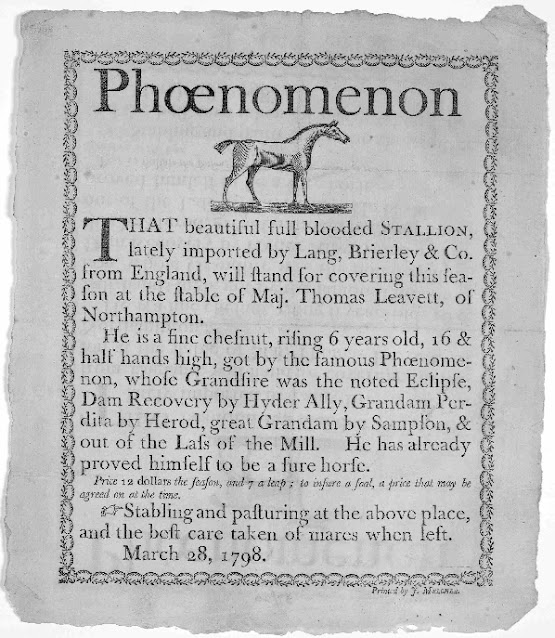
Research and author: Ameen Ahmed  In 1770s, there were racehorses named in America after Haidar Ali and Tipu Sultan, the father - son warriors from Mysore Kingdom in south India. Let us trace the journey of why and how this happened. The year was 1749 CE. A 27-year old youth Haidar Ali (anglicized: Hyder Ally ), born at Budikote village in present day Kolar district of India's Karnataka state put his military skills in action for the Mysore Army at Devanahalli fort. This is not very far from where the Bengaluru International Aiport (BIAL) is located today. The Mysore Army had besieged the fort for nine months to evict the local Poligor . Poligars (or Palegaras in Kannada language) were the local strong men, each controlling a few fortified settlements, prior to the British rule. Haidar helped his army emerge victorious. View of one of the entrances of Devanahalli fort in 2006, near Bangalore City. Haidar Ali earned fame during a battle at this fort in 1749. A year later...

Some British atrocities on civilians of south India during Anglo-Mysore Wars

Image
Research and author: Ameen Ahmed In today's India, the name Tipu Sultan brings with it a shrill debate, each time it is mentioned publicly. Tipu's detractors waste no time and leave no opportunity in highlighting sources, both contemporary and later, that seek to paint him as a bigot. Unfortunately this has, in the past three decades, taken the spotlight away from the purpose of his battles and perhaps his life- to fight the inhuman occupation by a non-native power. The British East India Company was not here in south Asia for a walk in the park. It was here to plunder the sub-continent's resources and take them back to Great Britain. And to achieve this, its soldiers indulged in loot, rape, murder and wanton destruction. The British Governments back then seemed to give a damn about the suffering and deaths of ordinary Indians. In this write-up, I try to highlight some of the miseries caused by British armies on the ordinary civilians of Karnataka (erstwhile Kingdom of Mys...

How Haidar Ali and Tipu Sultan's Mysore Kingdom overcame Britain’s industrial revolution war inventions

Image
Research and Author: Ameen Ahmed A British era cannon at Darya Daulat Bagh, Srirangapatna, southern Indian, the capital of Mysore Kingdom for many centuries until 1799. Pic: Author   An 18th century Atlantic slavery relic in Karnataka In September 2016, I was guiding a Canadian visitor through the palace and ruins of Srirangapatna. Among the many relics of British rule over India are the cannons one can see at many places like Srirangapatna, the erstwhile capital of Mysore Kingdom. At Darya Daulat Bagh, the summer palace of Mysore ruler Tipu Sultan, a couple of cannons have a curious GR mark engraved on their first reinforce (the part of the cannon that follows the vent). 18th century British cannons had certain words and numbers engraved on them. Among other things these coded engravings reveal the foundry where the cannon was cast or the person who owned that foundry as well as weight of the cannon barrel, size of the cannon ball it fired and name of the king who reigned ov...